
Translating Game and Anime Music into Grand Orchestral Concerts: Interview with Maestro Thanapol Setabrahmana
When Stardew Valley: Festival of Seasons was announced in the Philippines a year ago, fans were quick to snatch all the available tickets for the shows. For once it must be noted that a video game-centric orchestral concert sold out as quickly as a mainstream pop music sensation, much to the surprise of many, including the game’s own fans. In our local concert scene, that is refreshing news for once. Longtime Filipino fans of video games are finally getting their chance to witness more officially licensed orchestral shows of their beloved titles, which is in great part, thanks to Film Concerts PH.
A day before the actual show, Philippine Concerts got an exclusive interview with Maestro Thanapol Setabrahmana, the conductor for the show and the chief arranger of the music for Stardew Valley: Festival of Season and Symphony of Seasons. FYI: the concert in April 25 was a striking success. Read our concert review here: The Music of Pelican Town Comes Alive in Stardew Valley: Festival of Seasons in Manila
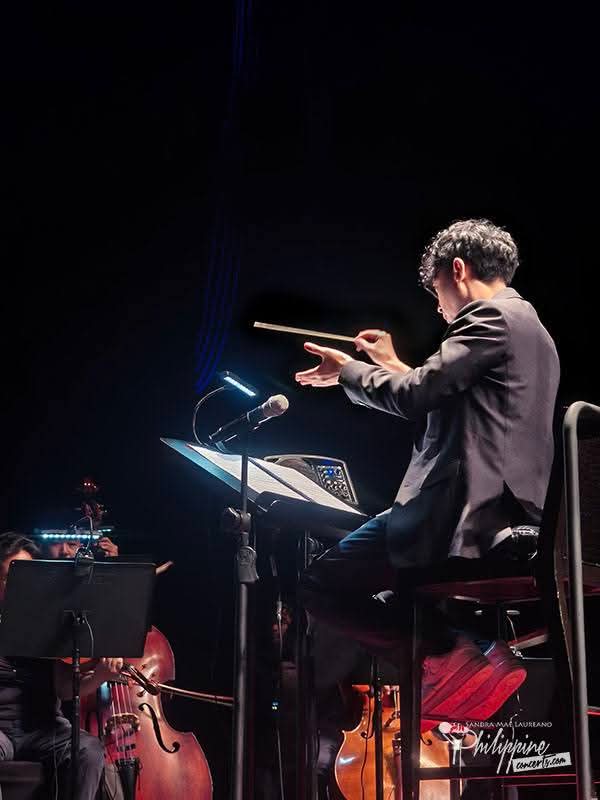
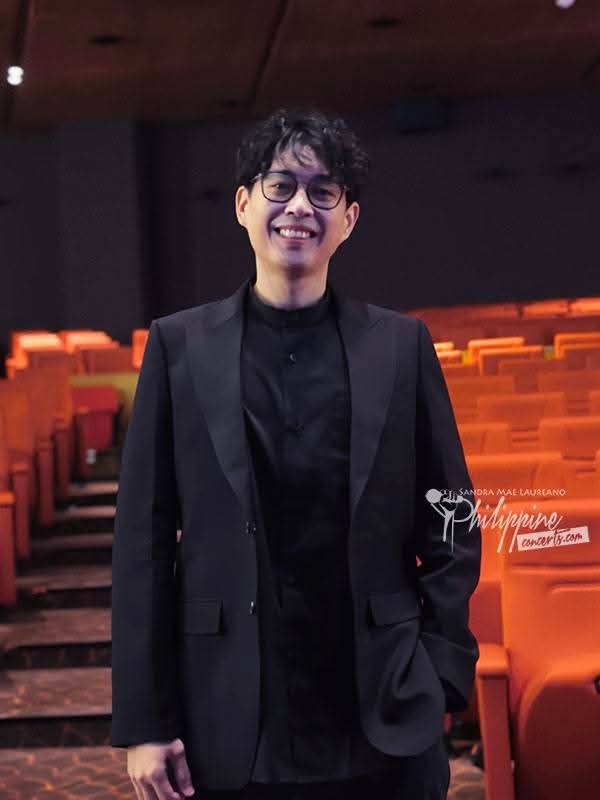
We got to ask him about how he got into conducting, his love for anime and games, his philosophy in music and a lot more. FYI again: he has also conducted for concert tours of some of the most renowned anime and game titles. Read on to get to know more about him.
Getting to know Thanapol Setabrahmana
Hailing from Thailand, he is mainly a conductor, but he also holds a lot of other occupations as the following: the Assistant Music Director of the Thailand Philharmonic Orchestra, the Music Director of the Mahidol Wind Orchestra, and the Chair of Conducting and Ensembles Department at the College of Music, Mahidol University. Previously, he had also worked with the Filharmonika Orchestra for How to Train Your Dragon 2 in Concert last December.
Beyond all that, he is quickly making a name for himself as the conductor for some of the most prominent anime and video game concerts worldwide including Violet Evergarden: Live in Concert USA Tour this year, North American leg of Evangelion Wind Symphony in 2025, Genshin Concert Tour in 2024 – all of which had gained many positive reviews from fans online. In 2023, he also pioneered the Symphonic Anime concerts which toured in Asia and the USA, and included pieces from “Death Note”, “Demon Slayer”, “Naruto Shippuuden” and “My Hero Academia”.
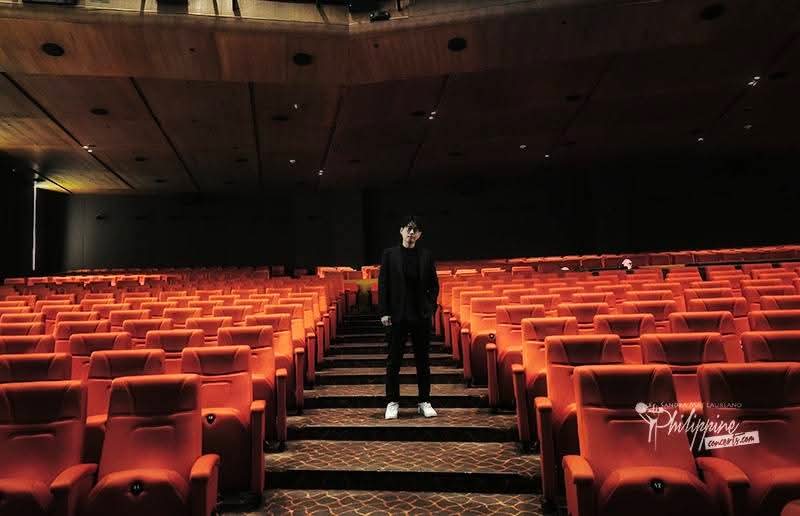
We got to interview Thanapol Setabrahmana before the official rehearsal with the Filharmonika Orchestra, a day prior to the shows. Talking to him up-close felt like talking to a highly conversant friend who is eager to share his thoughts. He always spoke in a calm, well-mannered tone, even when commanding the orchestra during their rehearsal.
What drew you to pursue classical music and to become a conductor? Is there a particular experience that inspired you?
Thanapol’s interest in music started out very early. In middle school, he was part of the school band, and he became one of the student conductors. Not only was he playing instruments, he also dabbled with arranging. He said, “I enjoyed arranging a lot, so every night after practicing, I would go home and arrange music.”
Eventually, their teacher and band director noticed his efforts and asked him to arrange music while the band played. Thanapol credits this early experience in shaping his craft as it allowed him to figure out what works and what doesn’t in an orchestra set-up.
How Final Fantasy became part of his origin story as a conductor
Yes, to state the obvious: he is a fan of anime, movies and games, especially the ones that he had worked on as the conductor.
“It’s a funny story when I was in middle school, it just happened to be one day that I was listening to the Final Fantasy soundtrack and I was shadow-conducting,” he said while his hands were making conducting gestures. One of the senior students saw him and invited him to be the conductor which he agreed to. “I learned a lot of repertoire in school bands, we played all kinds of stuff – classical music, movie soundtracks, and later on, when I had the chance, I programmed some game soundtracks as well.”
“I was always passionate about music of all kinds, game and anime. In the past decade when I started doing programmes of anime and game, it became a big hit in the country and I was supported by the college administrators to do more of those.”
Through those concerts, Thanapol got into contact with the composers and licensers which led to the official orchestral tours that we have now.
What are some of his favorite pieces?
“One of my firsts were Final Fantasy VIII and IX so I enjoy most VIII, IX… and X soundtracks.”
On the rewarding and challenging parts of being a conductor
“I think working with the orchestra is an art form, it’s a craft, it’s leadership. Leadership comes with all the package – the pressure, the responsibility and the skills. The challenging part is to really know the music, and to be able to command the orchestra.”
“In this kind of concert where there are lots of fans, and they are really passionate, we always feel the air in the performance, wherein everyone’s happy.” He added that despite the hard work that comes with producing a show – the countless sleepless nights, the many revisions, the writer’s block – being able to see the audience’s response is very rewarding.
How did you prepare for this show?
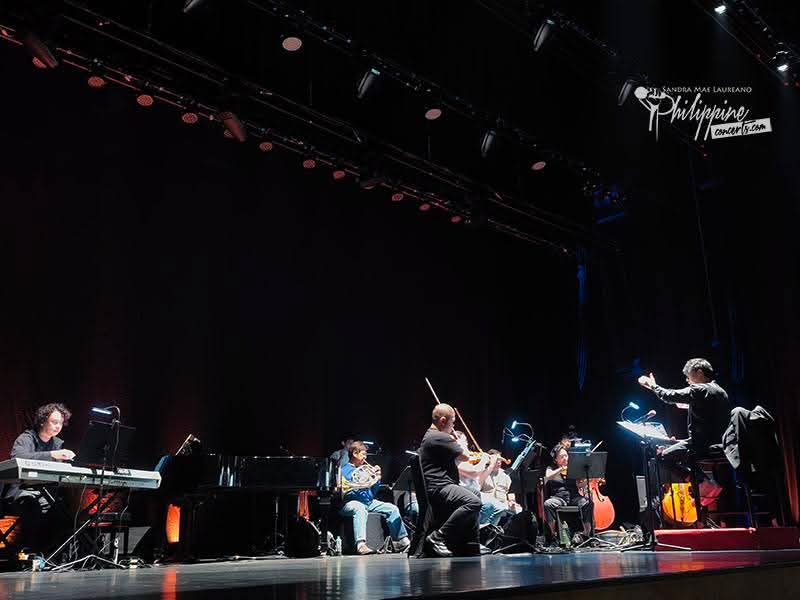
The show held in the Philippines was for Stardew Valley: Festival of Seasons which began in 2024 and featured an 11-piece chamber orchestra. This was followed by a bigger global concert tour titled Stardew Valley: Symphony of Seasons which is currently running this year. Thanapol is the conductor for the Asia stops of the tour, and he is also the chief arranger of the pieces.
“After conducting all these shows, it felt like a homecoming to the first version, and I just need to review a lot of them,” he said. Working with the Filharmonika Orchestra was easy for him because he had already met some of the members during How to Drain Your Dragon 2 in Concert in December 2025.
What is the difference between conducting for a classical concert and a game-concert like Stardew Valley?
“Whenever I conduct a soundtrack of any kind, usually I try to deliver them in the way that is quite authentic, truthful to the original rendition. In classical music, sometimes, you can play around a little bit, you can have some sort of room for interpretation. It’s a different aesthetic for this one. You have to keep in mind that the music really relates to the listener’s experience, how to recreate or conjure, summon that atmosphere – the nostalgia, the memory, the spirit of the music.”
He explained that in translating the original pieces into orchestral arrangements, he tries his best to find the elements that define the piece and he works on making it more cohesive.
“I always try to find the spirit, the essence, when we try to recreate it for the live ensemble. What is the essence of this piece? Is it the melody? Is it the color? Is it the drum pattern?”
How do you keep yourself inspired to take on a new project? Can you take us through your creative process?
“I’m a person that is easily inspired. There are projects that I did based on commissions, like some other people present stuff for me to recreate. Some of those I knew very well and some are very foreign to me.
“There are other stuff I created myself. I have my production called Symphonic Anime, a show that comprises music from different anime. I always have fun doing this production. I treat it like an exhibition. It’s not just a compilation of big hits, but sometimes, the theme. ‘I want to present based on mecha anime, anime centered around female protagonists. – how you present them, how you curate them, and sometimes you present the pieces that are not only famous, but pieces that are rarely heard – whether you believe it is good, to introduce them to a bigger audience.”
A lot of people tend to think that orchestral concerts are not as interesting as pop concerts. What would you tell them to convince them to give orchestral concerts a chance?
He believes that orchestral concerts are equally exciting.
“Many people that had never seen an orchestra before just have no idea what orchestras are like. Nowadays, it is still everywhere in the media we consume, in the soundtrack. Modern technology has helped many creators use synthesized sounds, but still many productions use live orchestra, musicians and ensembles. The orchestra is still very much alive, it’s just behind the scenes.”
What advice can you give to the younger generation who wish to pursue a career in classical music?
“I think they just need to practice a lot,” he said with a soft laugh.
Thanapol also added that they need to hone their knowledge on other artistic endeavors such as literature, fine arts, history, culture. “Since the old times, classical composers were making music, not only about notes or sounds. They are heavy readers of literature and consumers of arts, and those are the things that inspired them. For anyone who wants to pursue classical music, they really need to understand the context of our art.”
What other dream projects would you like to take on in the future?
“Fortunately, I already got to handle official franchises, many of them were my dream projects before. I still want to do more Symphonic Anime and introduce them to more countries, with more themes, I still want to do silent movies. In some cultures, it has become a lost art already. It would be great to re-introduce it to a wider audience.”
–
All the best for Maestro Thanapol Setabrahmana! Hoping to see more of him in the upcoming concert line-ups. Speaking as an ardent fan, it’s great to finally see that the Philippines included in the tour stops for official video game and anime symphonic concerts. We’ve longed for this inclusion a long time ago. Looking forward to more!
Special thanks to Film Concerts PH!


No Ticket Selling in the Comments Section. 0 thoughts on “Translating Game and Anime Music into Grand Orchestral Concerts: Interview with Maestro Thanapol Setabrahmana”