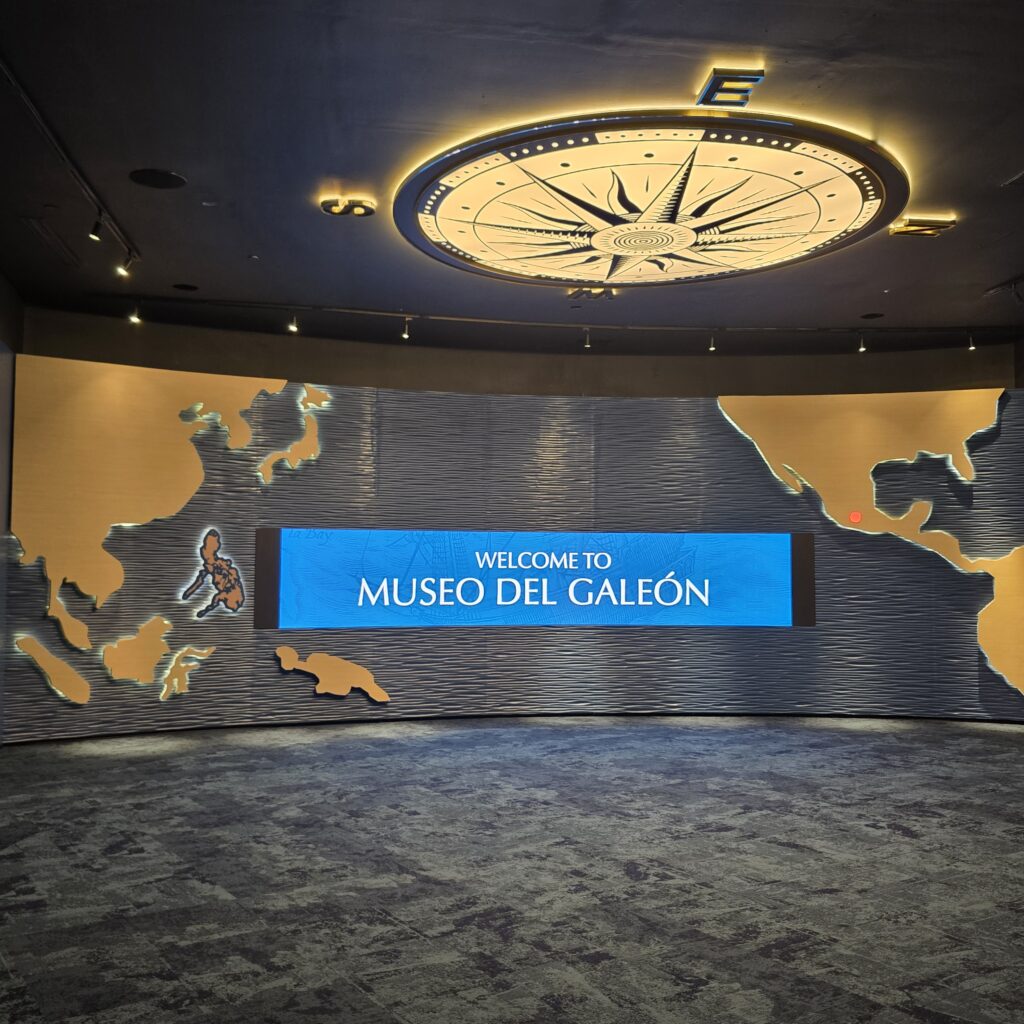
Right in the heart of SM Mall of Asia, next to the usual shopping, dining, and bayfront views, sits a gleaming silver dome that feels like it belongs to another era. Inside is Museo del Galeón, the Philippines’ first immersive maritime heritage museum. Opened to the public on May 1, 2026, it finally brings to life one of the most important and often overlooked chapters of Philippine and world history: the Manila–Acapulco galleon trade.
This isn’t a quiet, glass-case kind of museum. It’s experiential, sensory, and built for discovery. At its center stands a full-scale representation of the Galeón Espíritu Santo, a 17th-century ship originally built in Cavite around 1603 that made multiple peaceful crossings of the Pacific. Measuring roughly 40 meters long and 30–31 meters high, the fiberglass replica is massive enough that you can walk its decks, peer into the cramped crew spaces, and stand under the masts while a vast LED “Sea of Lights” wraps the dome in shifting seascapes, storms, and starry night skies. It is one of the largest indoor LED installations of its kind in the Philippines (and among the largest museum LED bands anywhere). The effect is immersive: you don’t just look at history, you step into it.
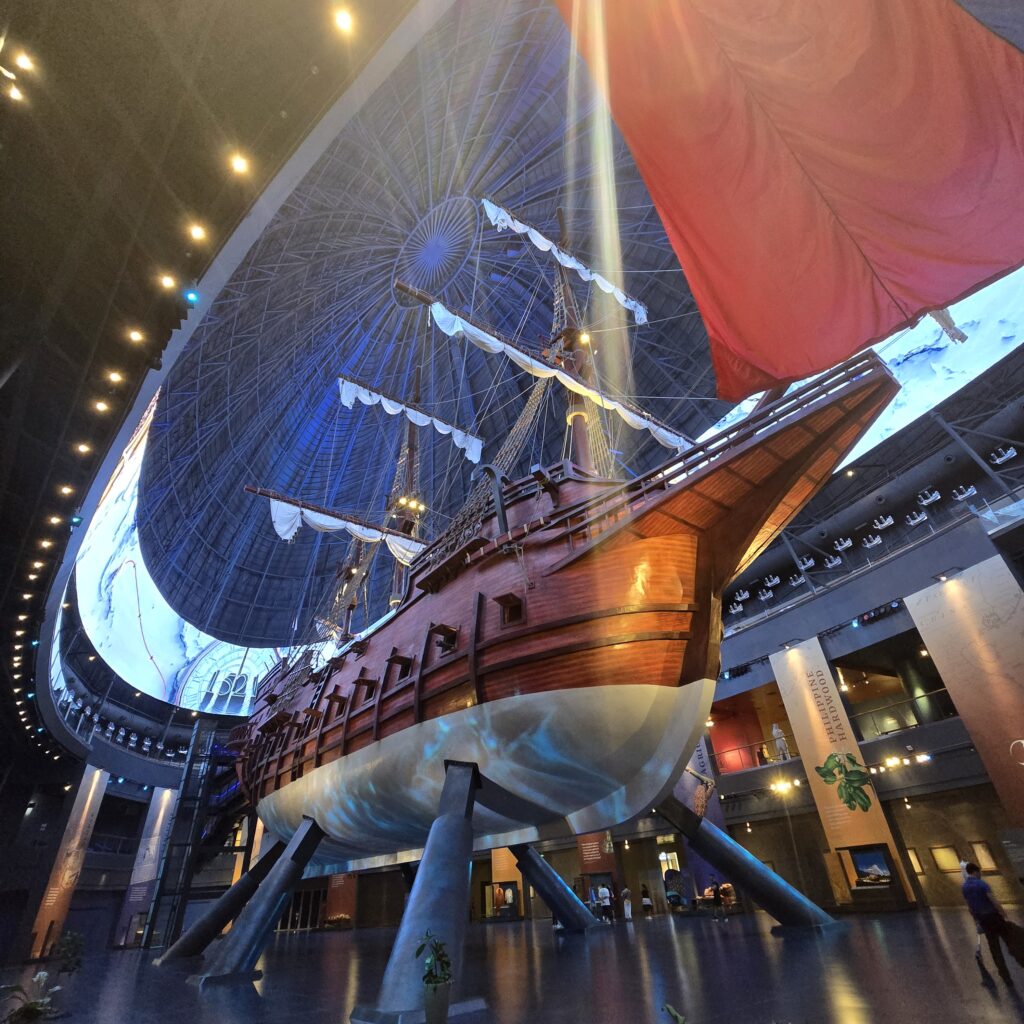
Walking through the exhibits felt like stepping into a different era of Philippine history. The museum does a really good job of bringing maritime stories to life: the galleon trade, the ships, the routes, the people involved. You get a clearer sense of how connected the Philippines already was to the rest of the world centuries ago. I left knowing a lot more than I expected to.
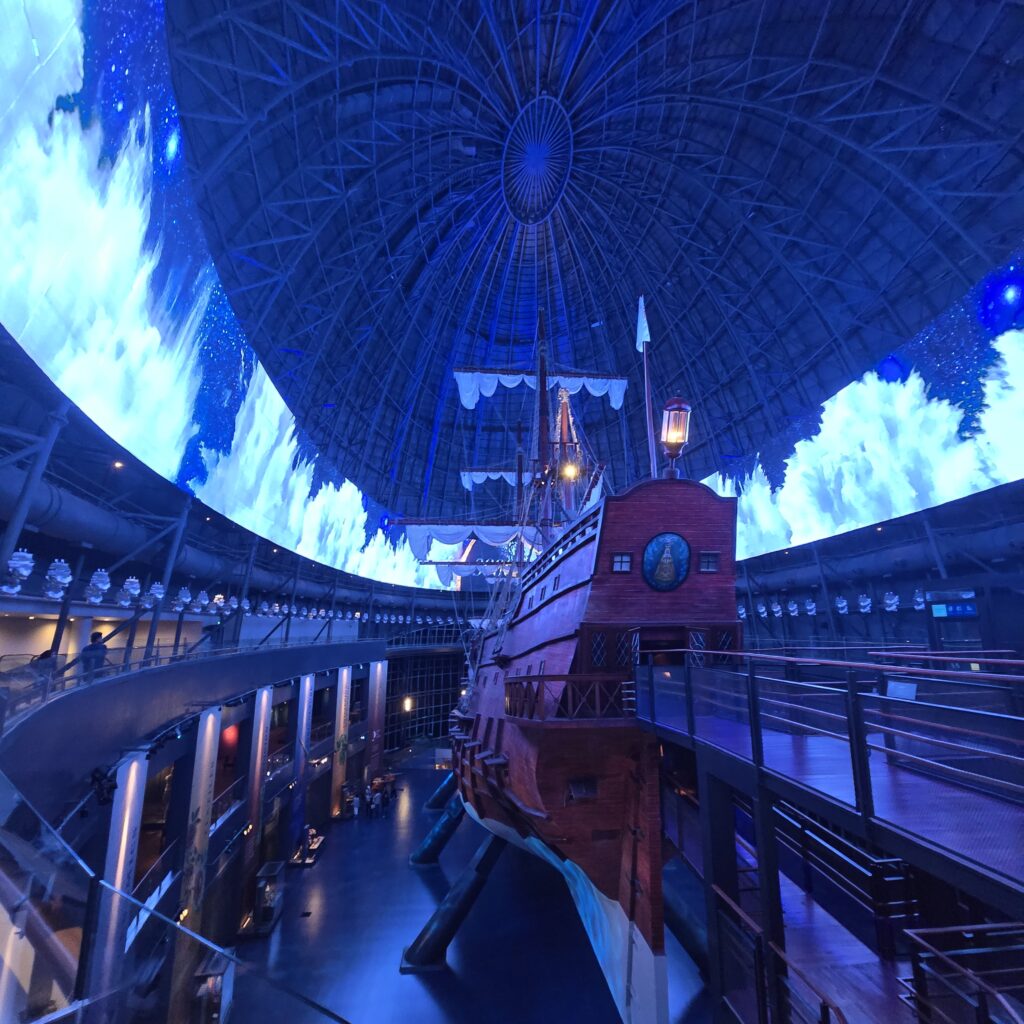
Most of the ships were built by Filipino hands, largely in Cavite using local materials and extraordinary craftsmanship. Filipino seafarers formed a large part of the crews that endured months-long voyages under harsh conditions. The museum places those people and that ingenuity at the center, connecting pre-colonial balangay traditions and early navigators to the galleon era and onward to the Philippines’ modern role as a major source of the world’s seafarers.
.What makes it a true must-visit at Mall of Asia is the rare combination of scale, location, and relevance. You can step out of a shopping mall or a seaside stroll and, within minutes, be standing on the deck of a galleon under a digital night sky. Families, students, history buffs, and curious tourists all find something here: pride in Filipino skill and resilience, a clearer sense of how the Philippines helped shape early globalization, and a visceral experience that sticks with you longer than a typical exhibit. Discounts for students, teachers, seniors, and PWDs, plus free entry for the youngest children, make it accessible. Hours are currently Wednesday–Sunday, 10 a.m. to 7 p.m. (with some sources noting broader availability as the museum continues to expand toward full completion).
In a city full of attractions, Museo del Galeón stands out because it doesn’t just display the past, it lets you board it. The next time you’re at Mall of Asia, skip past the usual stops for an hour or two and step inside the dome. You’ll leave with a richer understanding of why the sea has always been central to who Filipinos are, and why this particular voyage still matters.
Special thanks to SM PRIME for making this experience possible.
Leave a Reply